
Murukku: The 700-Year-Old Twisted Snack That Brings Families Together
From 13th-century Tamil texts to your Diwali snack box. Discover the history, technique, and regional variations of India's most iconic twisted snack.

Faaro Editorial
Editor
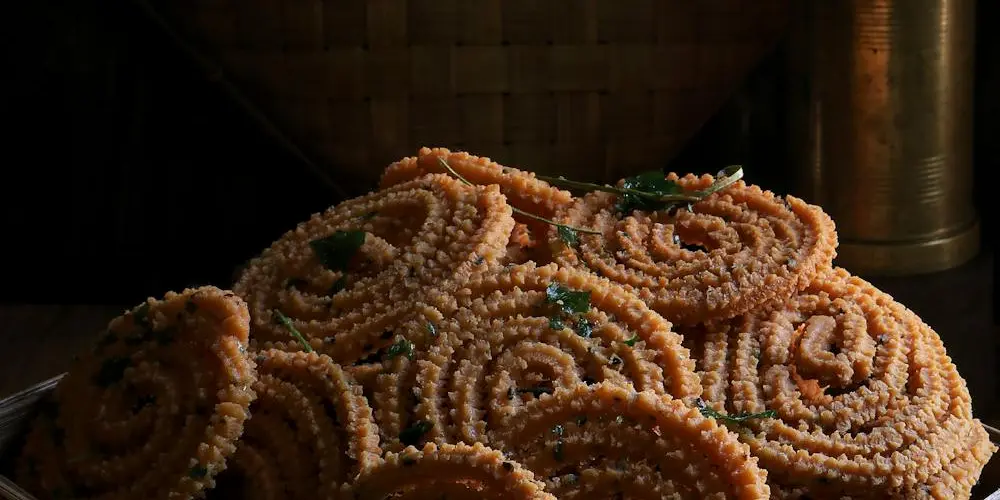
There is a reason every South Indian household has a murukku press tucked away in a kitchen drawer. This spiral-shaped, crunchy snack has been a part of Indian food culture for over 700 years, yet it tastes as relevant today as it did when it first appeared in medieval Tamil kitchens.
If you have already read our story about the ancient origins of Malabar banana chips, you know that South Indian snacks carry deep history. Murukku is no different. In fact, its story might be even older.
The First Written Record: 13th Century Tamil Nadu
The earliest known reference to murukku appears in Swami Desika's Ahara Niyama, a 13th-century text on food preparation and dietary guidelines. The text describes a spiral-shaped fried snack made from rice flour and urad dal, seasoned with cumin and asafoetida. Sound familiar?
The word 'murukku' itself comes from the Tamil verb 'murukkhu,' meaning 'to twist.' That name tells you everything about the technique. The dough is pressed through a mould and twisted into spirals before being lowered into hot oil. The shape is not decorative. It is functional. The spirals create maximum surface area, which means maximum crunch per bite.
In Tamil, the snack is 'murukku.' In Kannada, it becomes 'chakli.' In Telugu, 'chakralu.' In Marathi, 'chakli' again. In Gujarat, 'chakri.' One snack, one technique, dozens of names across India.
How Murukku Is Made: The Traditional Process
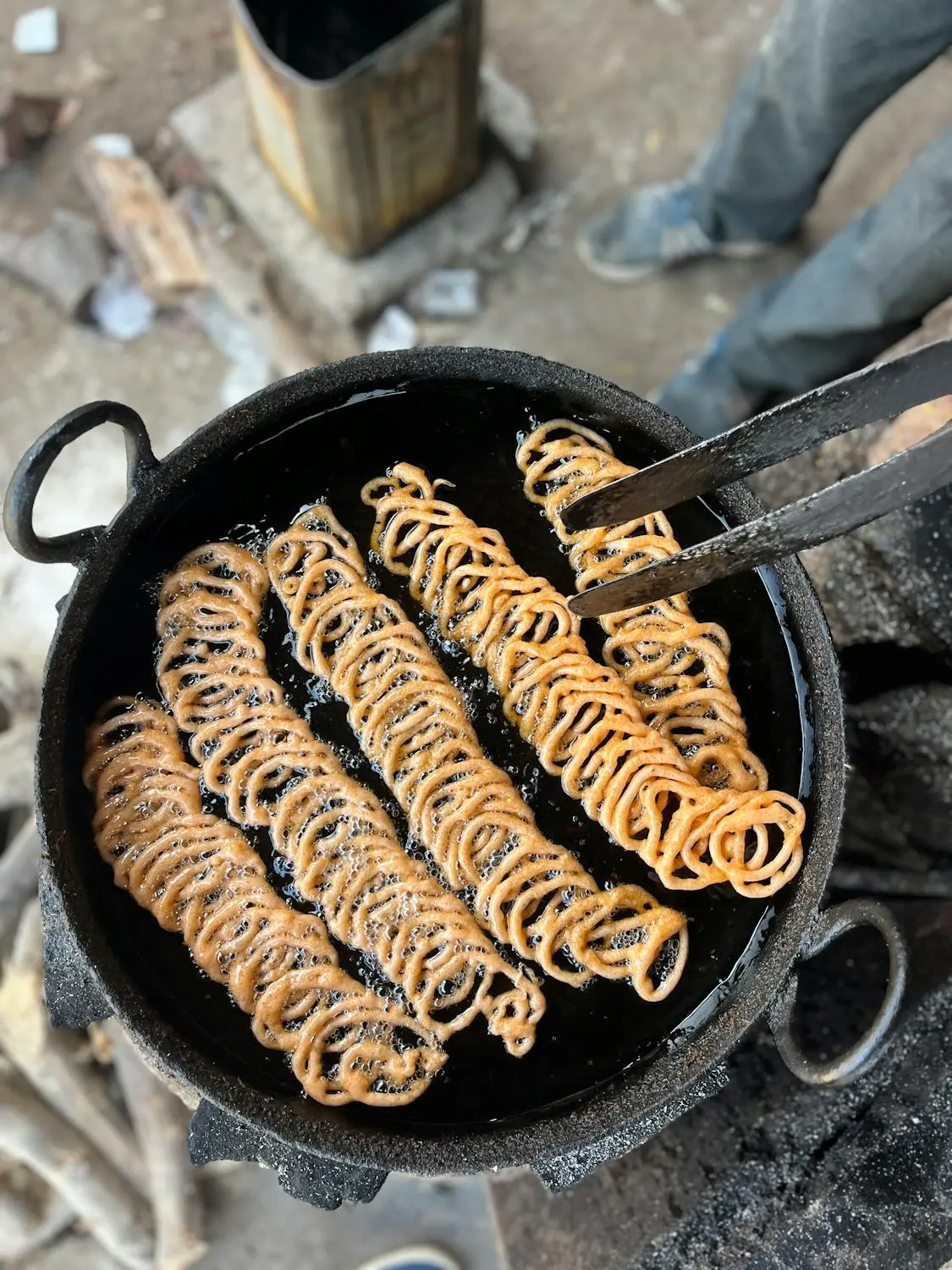
The dough: A proper murukku dough is a precise blend of rice flour and urad dal flour, typically in a 2:1 or 3:1 ratio. The urad dal provides binding and a subtle nuttiness. Cumin seeds, sesame seeds, asafoetida, and salt are mixed in. Some families add butter or coconut oil to the dough for extra flakiness.
The press: The murukku achu (press) is a brass or stainless steel cylinder with interchangeable discs. Each disc creates a different pattern — star-shaped cross-sections for kai murukku, thin ribbons for ribbon pakoda, tiny dots for thenkuzhal. The press is loaded, and the dough is squeezed directly into hot oil in a circular motion.
The fry: Traditionally fried in coconut oil or sesame oil, murukku cooks in about 3 to 4 minutes. The key indicator is sound — when the sizzling quietens, the moisture is gone and the murukku is done. Over-frying makes it bitter. Under-frying leaves it chewy.
The best murukku makers judge doneness by ear, not by sight. When the oil goes quiet, the murukku is ready. This is a skill passed from mother to daughter across generations.
Regional Variations: One Snack, Many Expressions
Kai Murukku (Hand Murukku): The oldest form. The dough is shaped by hand without a press, rolled into ropes and coiled into spirals. Found primarily in Tamil Nadu, this style has a thicker, more rustic crunch.
Mullu Murukku (Spiky Murukku): Pressed through a star-shaped disc, creating a surface covered in tiny ridges. These ridges trap more oil during frying, making mullu murukku richer and more flavourful.
Thenkuzhal: A smaller, thinner version pressed through a smooth round disc. Thenkuzhal is crispier and lighter, often the first variety to disappear from the Diwali snack box.
Ribbon Pakoda: Technically a murukku variant, pressed through a flat ribbon disc. The result is a thin, wide, wavy strip that shatters on first bite.
Murukku and Festivals: An Inseparable Bond
In South India, certain snacks belong to certain festivals the way turkey belongs to Thanksgiving. Murukku belongs to Diwali.
Weeks before Deepavali, kitchens across Tamil Nadu, Kerala, Karnataka, and Andhra Pradesh begin production. The murukku press comes out. Bags of rice flour are bought in bulk. Oil is stocked. And then, for days, the house fills with the rhythmic sound of dough being pressed and oil crackling.
The finished murukku is stored in large steel containers — the same kind used for banana chips during Onam. These containers are placed prominently in the living room, offered to every visitor, and sent to relatives by the kilo.
A South Indian home without murukku during Diwali is like a home without lights. It is technically possible, but nobody would accept it.
The Nutrition Angle: What Is Actually in Murukku?
Murukku is not a health food, and we will not pretend otherwise. But compared to many processed snacks, its ingredient list is remarkably clean:
- Rice flour: The primary base, naturally gluten-free
- Urad dal flour: Adds protein (about 25g per 100g of raw dal) and binding
- Coconut oil or sesame oil: Traditional frying oils with no trans fats
- Cumin and sesame seeds: Natural flavouring, rich in iron and calcium
- Salt and asafoetida: That is the entire list. No preservatives, no MSG, no artificial colours
Like we discussed in our banana chips vs potato chips comparison, the type of oil used for frying matters enormously. Traditional murukku fried in coconut oil benefits from the same oxidative stability and zero trans-fat advantages.
Why Mass-Produced Murukku Does Not Taste the Same
Walk through any supermarket snack aisle and you will find packaged murukku from large manufacturers. Pick one up and read the ingredients. You will likely find refined palm oil, maltodextrin, flavour enhancers (INS 627, INS 631), and anti-caking agents.
The reasons are economic. Coconut oil costs three to four times more than palm oil. Real cumin and sesame cost more than synthetic flavouring. Hand-pressing is slower than machine extrusion. Every substitution saves money and loses flavour.
This is not a judgement on large manufacturers. Scale demands compromise. But it is a reason to seek out murukku made the traditional way, with honest ingredients and real technique.
The Faaro Take on Murukku
At Faaro, our murukku is made using the same process your grandmother would recognise. Rice flour and urad dal in the right ratio. Real cumin. Real sesame. Fried in coconut oil until the sizzle goes quiet. No shortcuts, no substitutes.
We believe the best snacks are the ones with the shortest ingredient lists and the longest traditions behind them.
Explore our full range of handcrafted South Indian snacks — made fresh, shipped fast, and crafted with love from Kerala.
Share this article
Related Articles

Malabar Banana Chips: The 2,000-Year-Old Snack That Kerala Gave the World
From ancient Roman frying techniques to Kerala's coconut oil kitchens. discover the rich history, tradition, and craft behind Malabar banana chips.
9 min read
Kerala Banana Chips vs Potato Chips: Which Is Actually Healthier?
An honest, data-backed comparison of Kerala banana chips and potato chips. We break down the calories, fats, fibre, oils, and ingredients without the marketing fluff.
8 min read