
Is Dark Chocolate Actually Healthy? An Honest Guide for South Indian Snackers
The real science on dark chocolate — genuine benefits, honest caveats, why the type of fat matters, and how to enjoy it the smart way as part of a balanced South Indian diet.

Faaro Editorial
Editor

It is the question every health-conscious South Indian snacker eventually asks, usually while reaching for a second square: is dark chocolate actually good for me, or is that just a story we tell ourselves? The honest answer is somewhere in the middle — and the details matter more than the headlines suggest. Let us separate the science from the wishful thinking.
What 'Dark Chocolate' Actually Means
Dark chocolate is chocolate made with a high proportion of cocoa solids and cocoa butter, and little or no milk. The number you see on the wrapper — 55%, 70%, 85% — is the percentage of the bar that comes from the cocoa bean. The higher the percentage, generally the less sugar and the more of the compounds people associate with health benefits. Milk chocolate, by contrast, typically sits around 30 to 40% cocoa with added milk solids and more sugar.
The benefits people talk about come from the cocoa, not the chocolate per se. A 30% cocoa bar drowning in sugar will not do much for you. A 60 to 70%+ bar is where the interesting compounds start to concentrate.
The Genuine Benefits (Backed by Research)
- Flavanols and antioxidants: Cocoa is rich in flavanols, plant compounds studied for their antioxidant activity. Several studies link cocoa flavanols to improved blood-vessel function and modest reductions in blood pressure.
- Heart health signals: Population studies have associated moderate dark-chocolate consumption with lower risk markers for heart disease — though association is not the same as proof, and the people who eat dark chocolate in moderation tend to have other healthy habits too.
- Minerals: Dark chocolate is a meaningful source of iron, magnesium, copper and manganese — minerals many Indian diets run short on.
- Mood and focus: Small amounts of caffeine and theobromine give a gentle lift, and there is preliminary research on cocoa flavanols and cognition.
The Honest Caveats
Now the part the wellness influencers tend to skip. Chocolate is still an energy-dense food. Even a good dark bar carries meaningful fat and sugar, and the benefits above are seen with small, regular amounts — a square or two — not half a bar in one sitting. The flavanol content also varies hugely between bars, and most commercial processing reduces it. Dark chocolate is a treat with some genuine upsides, not a health supplement.
The sweet spot is moderation: a small portion of good dark chocolate, enjoyed regularly, fits comfortably into a balanced South Indian diet. The problem is never the square. It is the second, third and fourth square.
Why the Type of Fat Matters
There is a South Indian angle here worth dwelling on. We have written at length about why the type of fat in your snacks matters — the difference between honest fats and cheap, repeatedly-heated oils. Real chocolate gets its fat from cocoa butter, a naturally stable fat, rather than the refined palm or hydrogenated oils that pad out cheap confectionery. Reading the ingredient list of a chocolate bar is exactly as important as reading it on a packet of chips.
Avoid bars listing 'cocoa butter substitute', 'vegetable fat' or hydrogenated oils high in the ingredients. Real chocolate uses cocoa butter. The substitutes are cheaper and lack both the flavour and the nutritional profile.
Dark Chocolate the Smart Way: Almora Dark
If you want the dark-chocolate experience with a little extra goodness built in, our Almora Dark bar is a good place to start. It pairs rich, intense dark chocolate with roasted almonds and raisins — so alongside the cocoa's benefits you get the healthy fats and vitamin E of almonds and the natural, fibre-rich sweetness of raisins. At 6g of dietary fibre and just 38g of sugar per 100g, it is the least-sweet, most grown-up bar in our range.
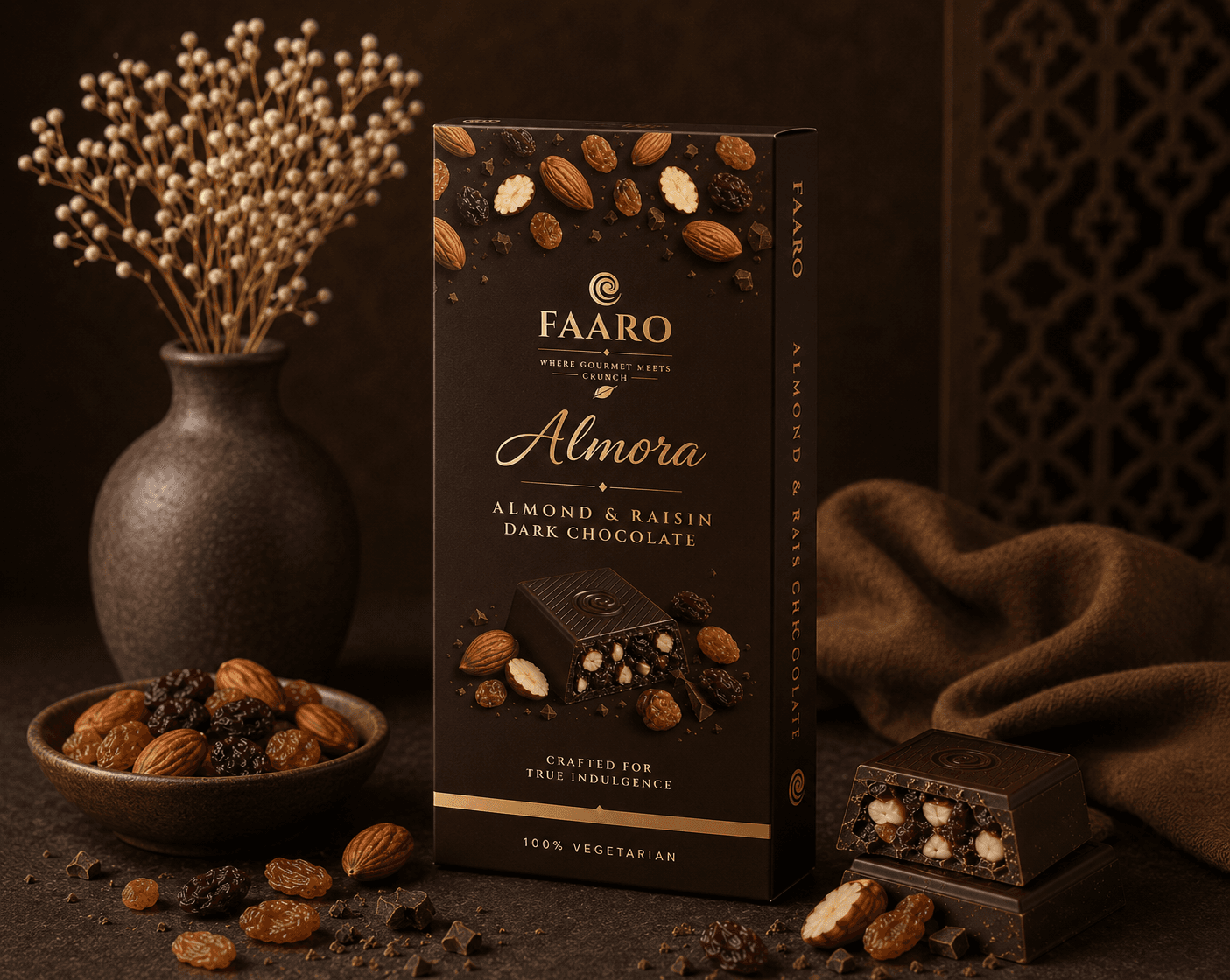
The almonds matter for more than flavour. Their protein and fat slow down how quickly the sugar hits your bloodstream, making a nut-studded dark bar a gentler choice than plain milk chocolate — and a far more satisfying one, because you are chewing real nuts, not just sugar.
How to Enjoy Dark Chocolate Without Guilt
- Stick to a square or two at a time — savour it slowly rather than snacking mindlessly
- Choose bars with real cocoa butter and a shorter ingredient list
- Pair it with something that slows the sugar: nuts, or a black filter coffee
- Treat it as a daily small pleasure, not a binge food
- Look for added nuts or fruit, which bring fibre, protein and healthy fats
Dark chocolate, like a well-made traditional snack, is best understood as honest food enjoyed in sensible amounts. It is not a miracle, and it is not a sin. It is one of life's genuinely good small things — and when it is made with real cocoa, real nuts and no shortcuts, you can enjoy it with a clear conscience.
Curious to try the grown-up end of the chocolate spectrum? Explore Almora Dark and the rest of Faaro's range. Free shipping on orders above Rs 499.
Share this article
Featured Products
Related Articles

Milk, White or Dark? A Beginner's Guide to Choosing Your Chocolate Bar
Milk, white and dark chocolate explained in plain language — what really separates them, what each tastes like, and how to choose the right one for your palate or your gift.
4 min read
Almonds, Cashews, Walnuts: Why Nut-Loaded Chocolate Is Made for South Indian Palates
From cashew-crowned payasam to nut-packed chocolate bars — why nut-loaded chocolate feels like home to South Indian palates, and a tour of the nuts (and bars) worth knowing.
4 min read
Filter Coffee Meets Chocolate: The South Indian Pairing You Didn't Know You Needed
South Indian filter coffee is one of the finest partners chocolate could ask for. A bar-by-bar guide to pairing degree coffee with dark, hazelnut, white and pistachio chocolate.
4 min read
Kerala Banana Chips vs Potato Chips: Which Is Actually Healthier?
An honest, data-backed comparison of Kerala banana chips and potato chips. We break down the calories, fats, fibre, oils, and ingredients without the marketing fluff.
8 min read